Shogi · Japon satrancı · telefonunuzda
Shogi için bir oda.
İki hızda dereceli oyunlar. Kodla arkadaş daveti. Kendi insan gibi oynayan motorumuz Mino AI 1’den 8’e kadar olan seviyelerde, 9’dan 12’ye hesaplayan bir motor. Günün tsume’si. Ve her oyunun incelemesi, oynadığınız masanın üstünde.
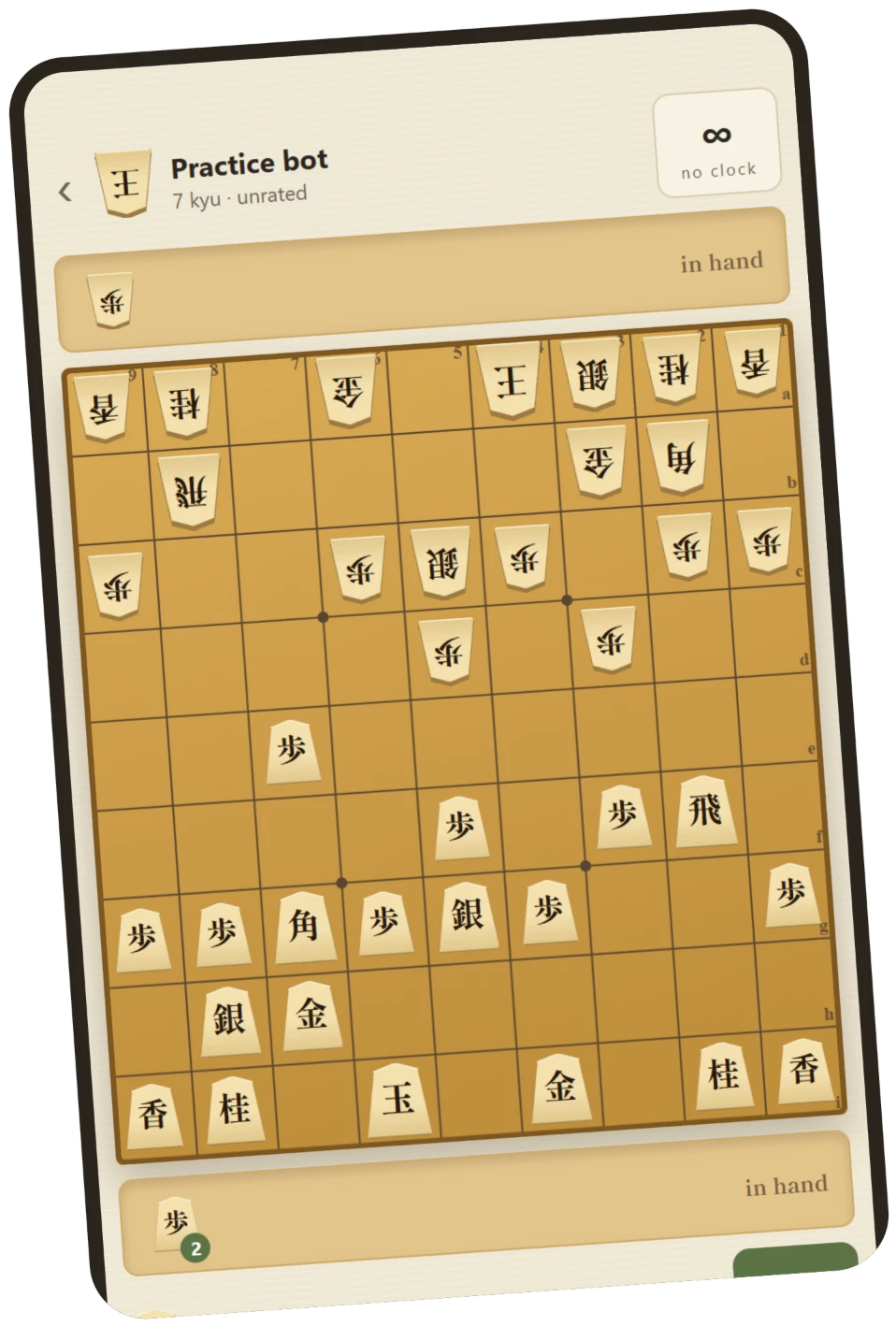
Mevcut sürümden gerçek bir ekran: bota karşı bir oyun, elde iki piyon.
Oyundan sonra · 感想戦
Birlikte inceleyin.
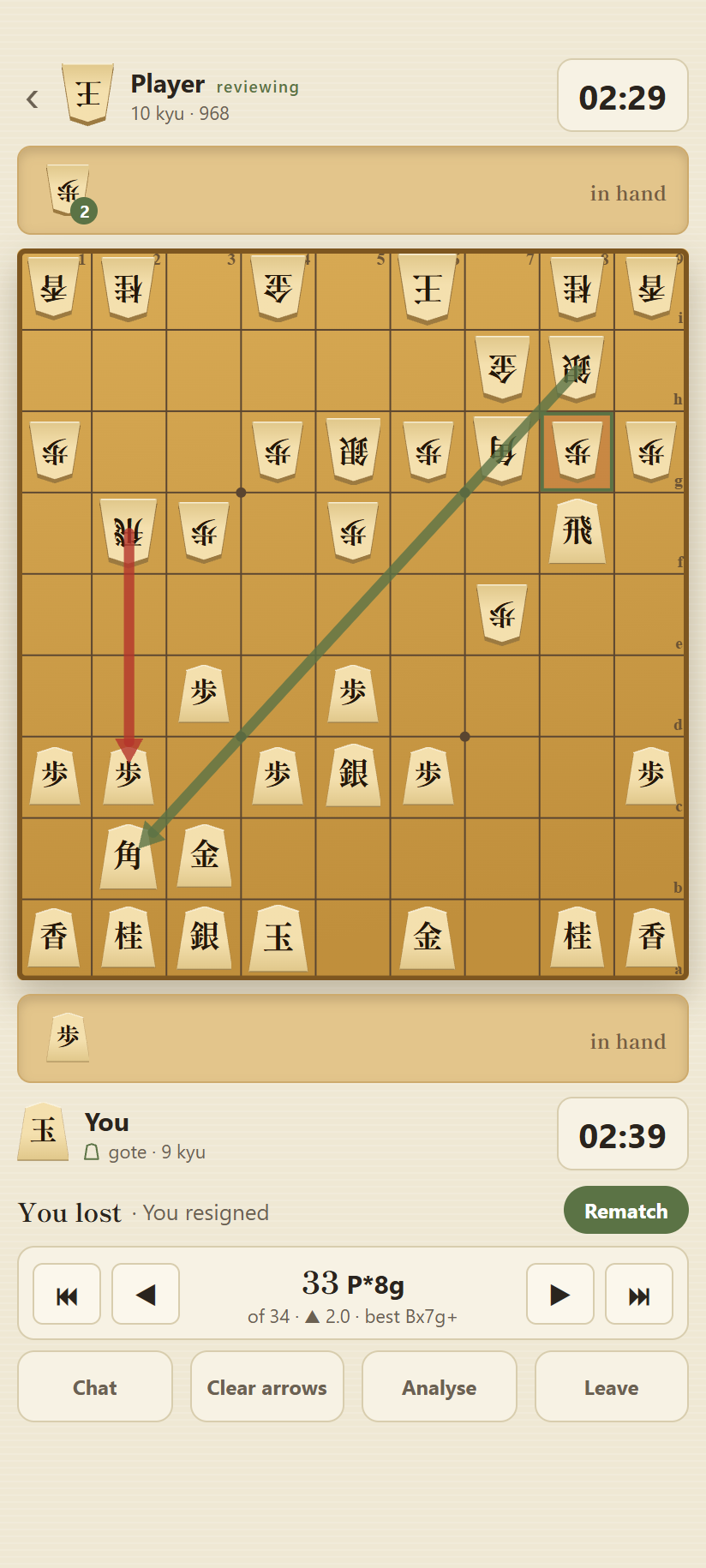
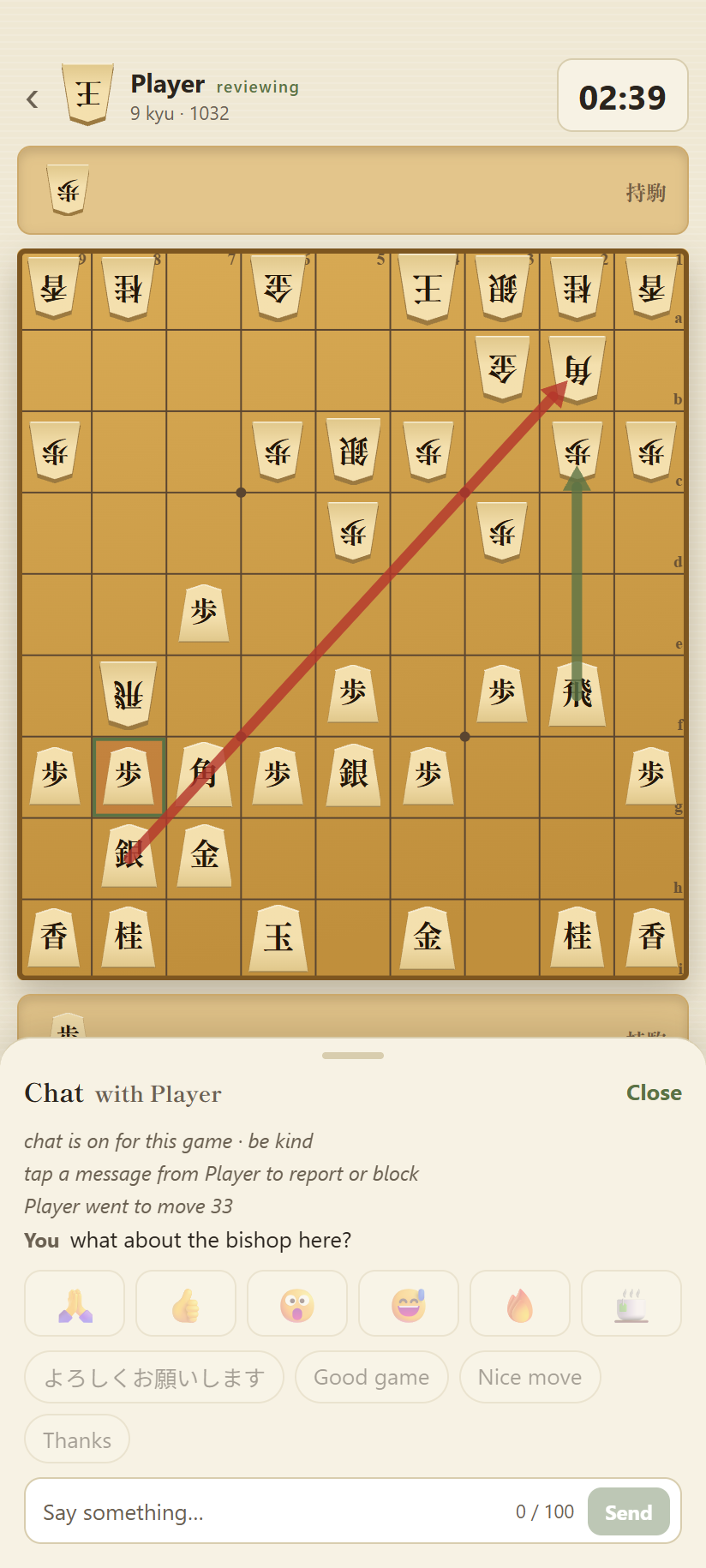
Shogi’de oyun, bittiğinde bitmez. İki oyuncu da hamle hamle geri dönüp birlikte inceler; bu geleneğin adı kansōsen. Burada oda tam bunun için açık kalıyor: tek bir paylaşılan tahta, kendi renginizde oklar, önünüzdeki konum için motorun varyantı ve oyun boyunca kullandığınız sohbet.
Sonra tek dokunuşla rövanş, renkler değişmiş olarak.
Kızıl ok sizin, çay yeşili onların. Sayfayı çevirmek okları siler, gerçek bir tahtadaki gibi.
Bulmacalar
Günde bir tsume, ve tırmanılacak bir merdiven.
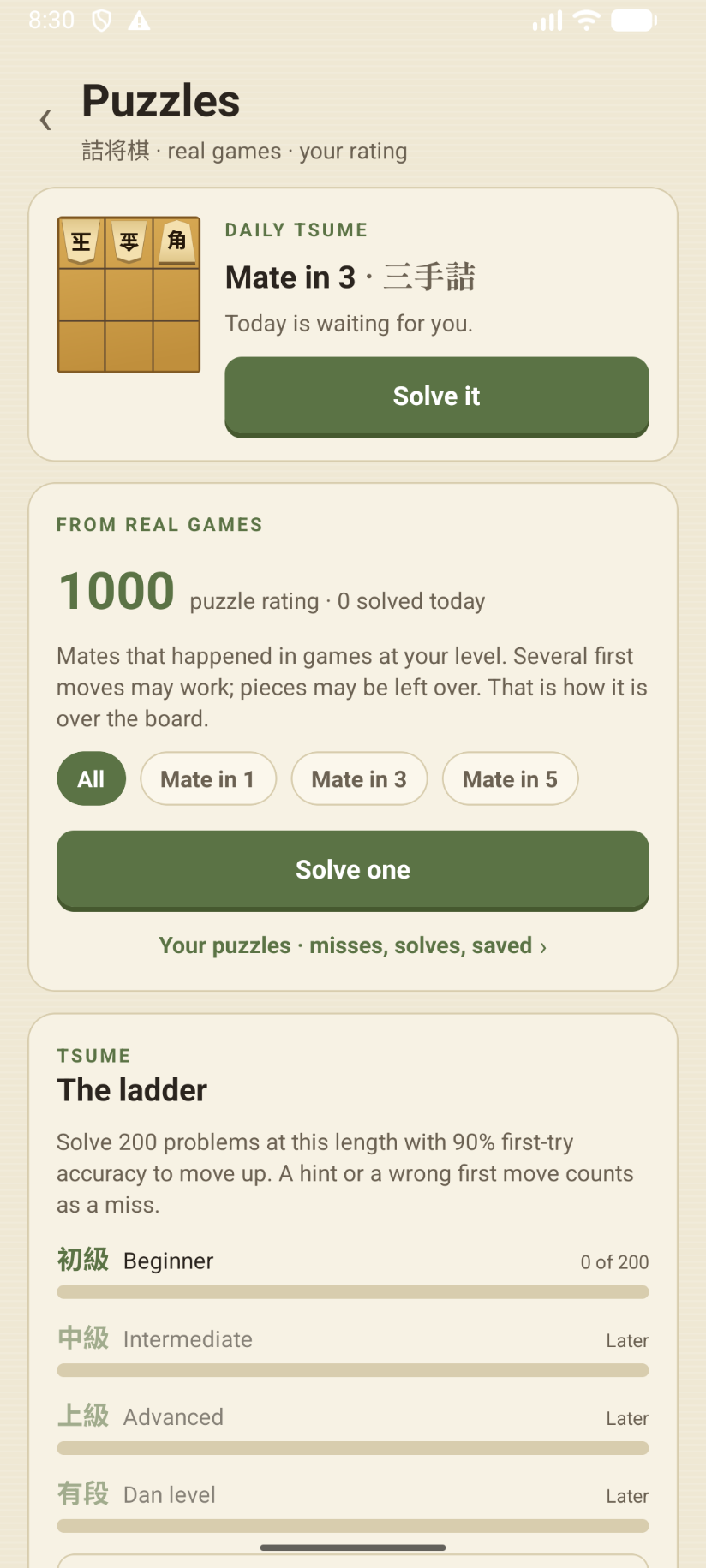
Tsume mat problemleridir, geleneksel biçimiyle: sizin taşlarınız, savunanın şahı ve diğer bütün taşlar savunanın elinde. Her gün bir tane gelir. Altında, kendi bulmaca puanınıza göre gerçek oyunlardan alınmış matlar var; burada birden fazla hamle işe yarayabilir ve taş artabilir, çünkü tahtanın başında iş böyle yürür.
Merdiven tek hamlede mattan yukarı çıkar. İki yüz deneme ve ilk denemede yüzde doksan doğruluk sizi bir üst basamağa taşır; ipucu ya da yanlış ilk hamle kaçırılmış sayılır.
Her oyun incelenir
Nerede döndü.
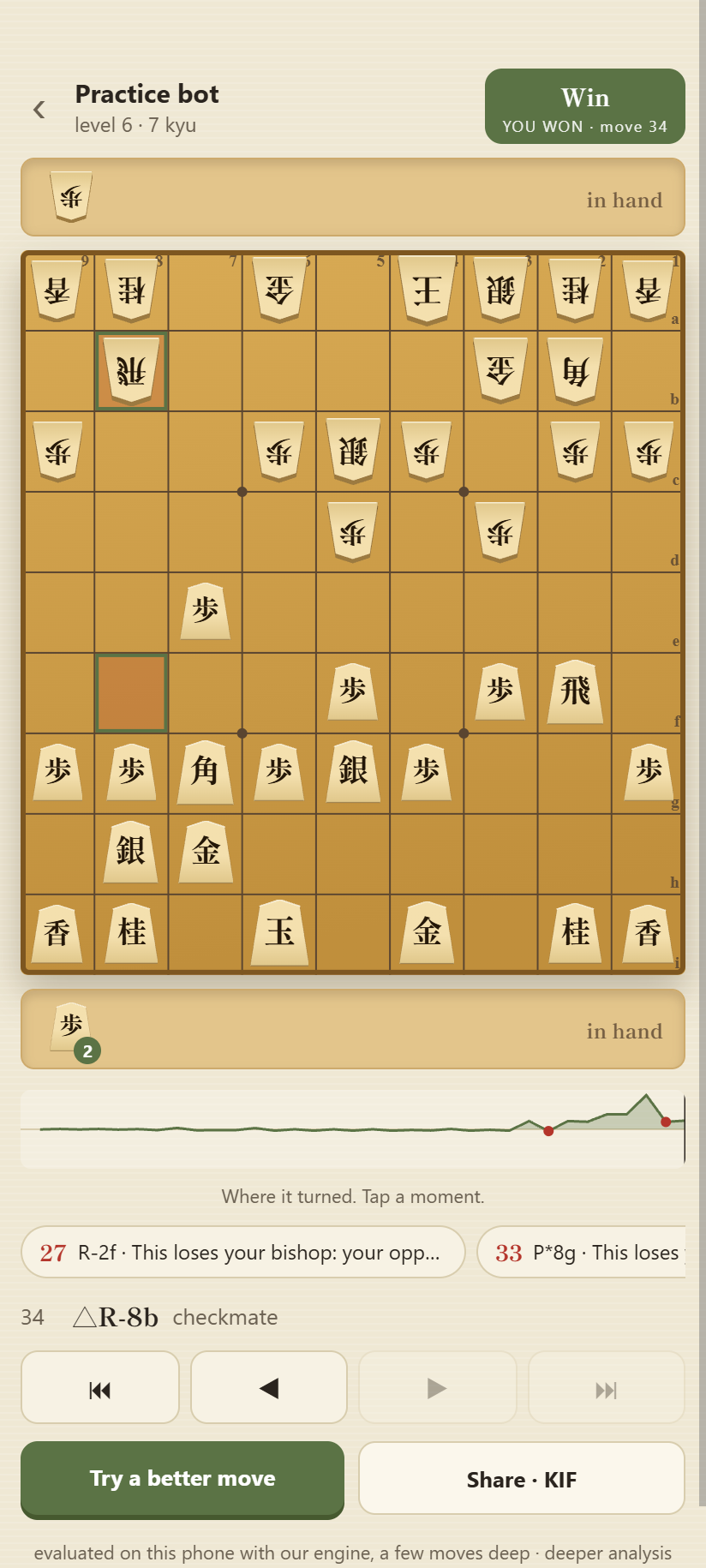
Oynadığınız her oyun saklanır ve telefonda incelenir. Tahtanın altındaki çizgi hamle hamle değerlendirmedir; noktalar oyunun döndüğü anları işaretler. Üzerinde parmağınızı gezdirip herhangi bir konuma gidin, sonra tam oradan bota karşı daha iyi bir hamle deneyin.
Sonra Mino aynı hamleleri bir kez daha okur ve aramanın cevaplayamadığı soruyu cevaplar: sizin gücünüzdeki biri bunu oynar mıydı? Oyunu kaybettiren ve sizin seviyenizde neredeyse herkesin oynadığı bir hamle bir derstir. Aynı hamleyi seviyenizde kimse oynamıyorsa, tek seferliktir. Her dönüm noktasında 1000, 1400, 1700 ve 2000 civarındakilerin ne oynayacağı da görünür.
Çizgi yakından: ortanın üstü sizin lehinize; noktalar oyunun döndüğü anlar, her birinde neyin daha iyi olduğuna dair bir not var.
Arkadaşlar ve masada bir iki kelime
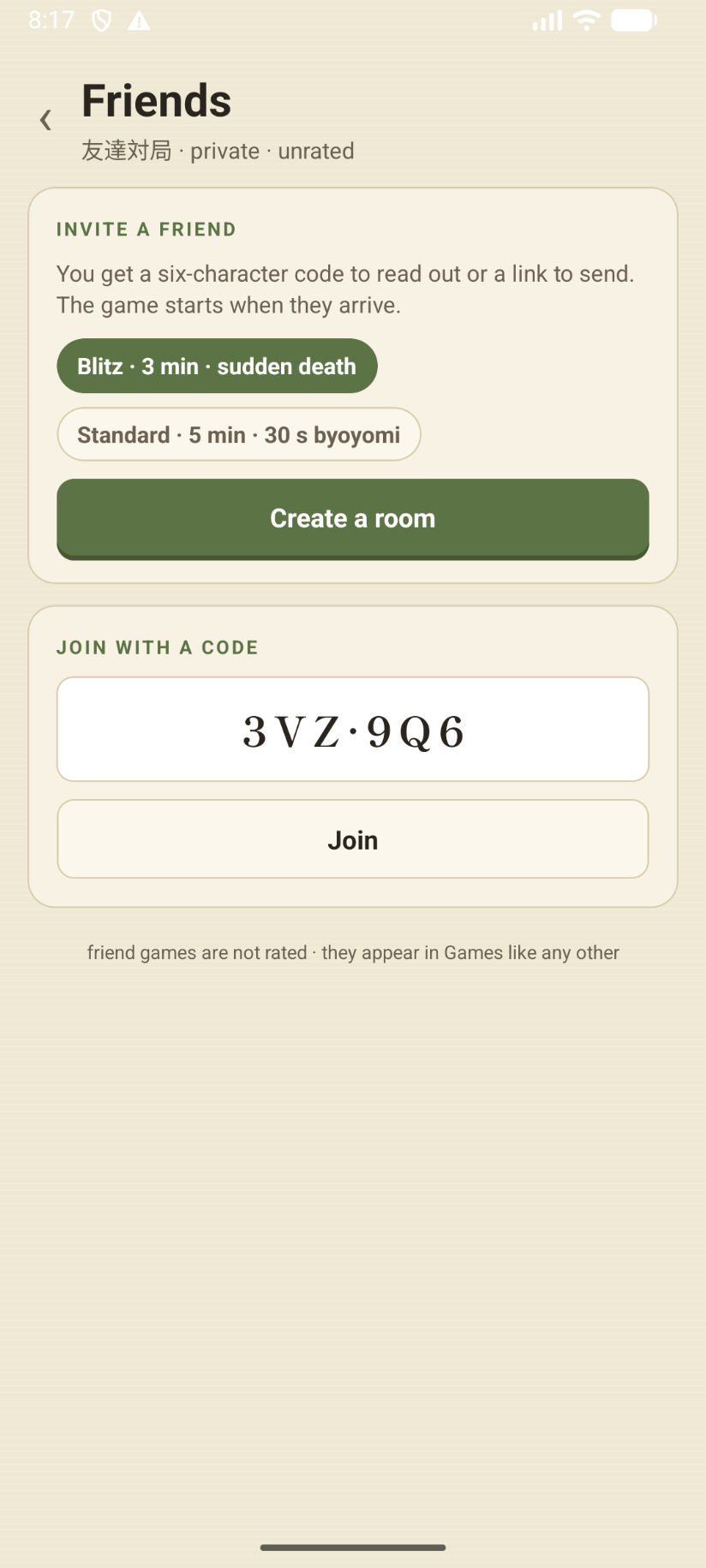
Bir kod, bir bağlantı, bir oyun.
Bir oda kurun ve altı karakteri okuyun, ya da bağlantıyı gönderin. Arkadaşınız geldiğinde oyun başlar. Sohbette damgalar, birkaç hazır ifade ve bir satır metin var; şikâyet ve engelleme tek dokunuş uzakta, sohbeti tamamen kapatabilirsiniz de.
Rakipler · ミノAI
İnsan gibi oynayan bir rakip.
Bilgisayar rakiplerinin çoğu, hata yapması söylenmiş çok güçlü bir motordur. Yirmi kusursuz hamle oynar, sebepsiz bir taş verir, sonra yine kusursuz oynamaya döner. Kimse böyle oynamaz, dolayısıyla bundan öğrenilecek bir şey de yoktur.
Mino bizim kendi motorumuz; her güçteki oyuncunun gerçekte ne seçtiğini öğrenmek için lishogi.org üzerinde oynanan dereceli insan oyunlarının milyonlarca konumuyla eğitildi. Yaptığı her hamle, insanların yaptığı bir hamledir. En zayıf rakip rastgele değil, olabilir bir rakiptir.
Adını 美濃囲い’den alır, çoğu oyuncunun kurmayı ilk öğrendiği surdan. Mino AI nasıl çalışır →

Öğren
Okunan değil, oynanan dersler.
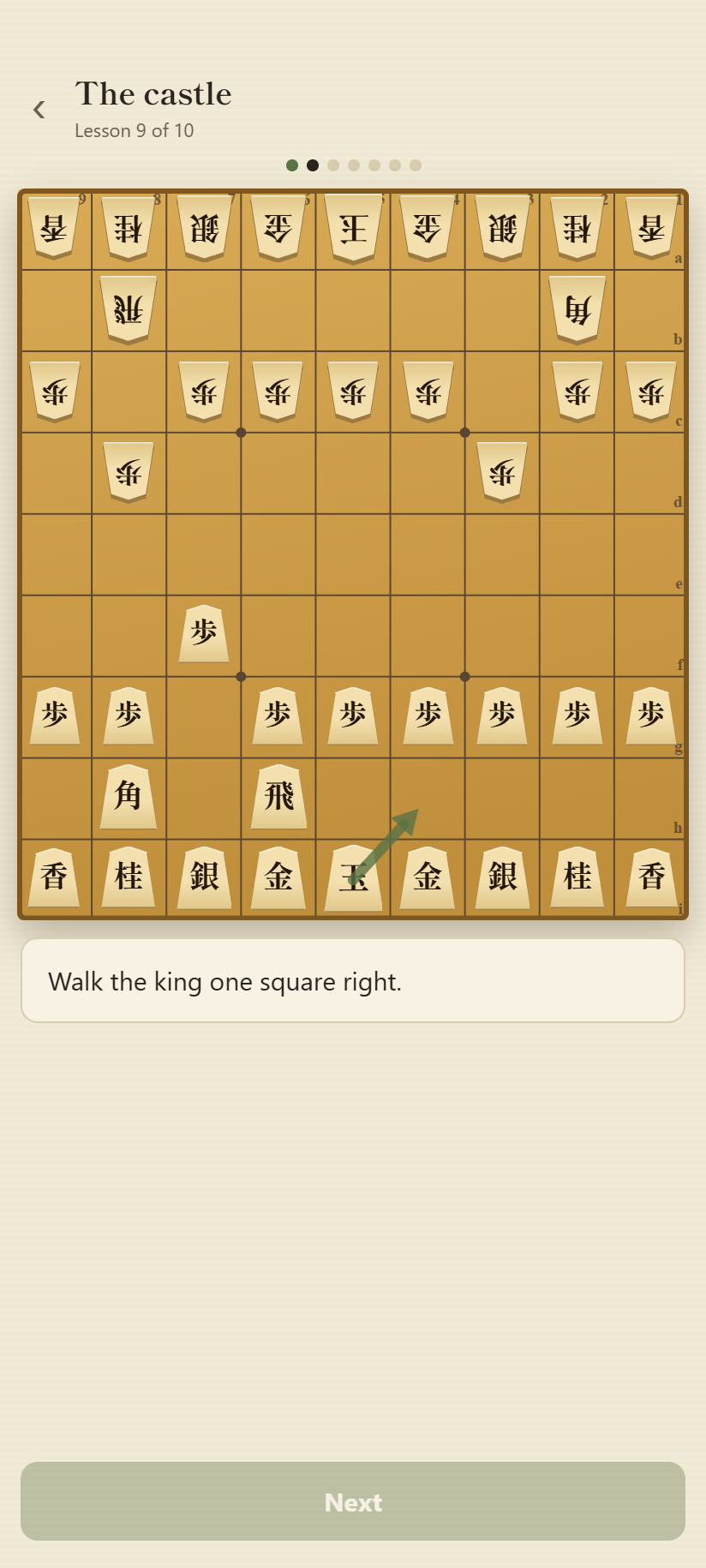
Tahtanın üstünde on ders: her taşın nasıl gittiği, elden koyma nedir, terfi neden önemlidir ve ilk surunuz Mino nasıl kurulur. Her adım sizin yaptığınız bir hamle, ve bir ok taşın nereye gideceğini gösteriyor.
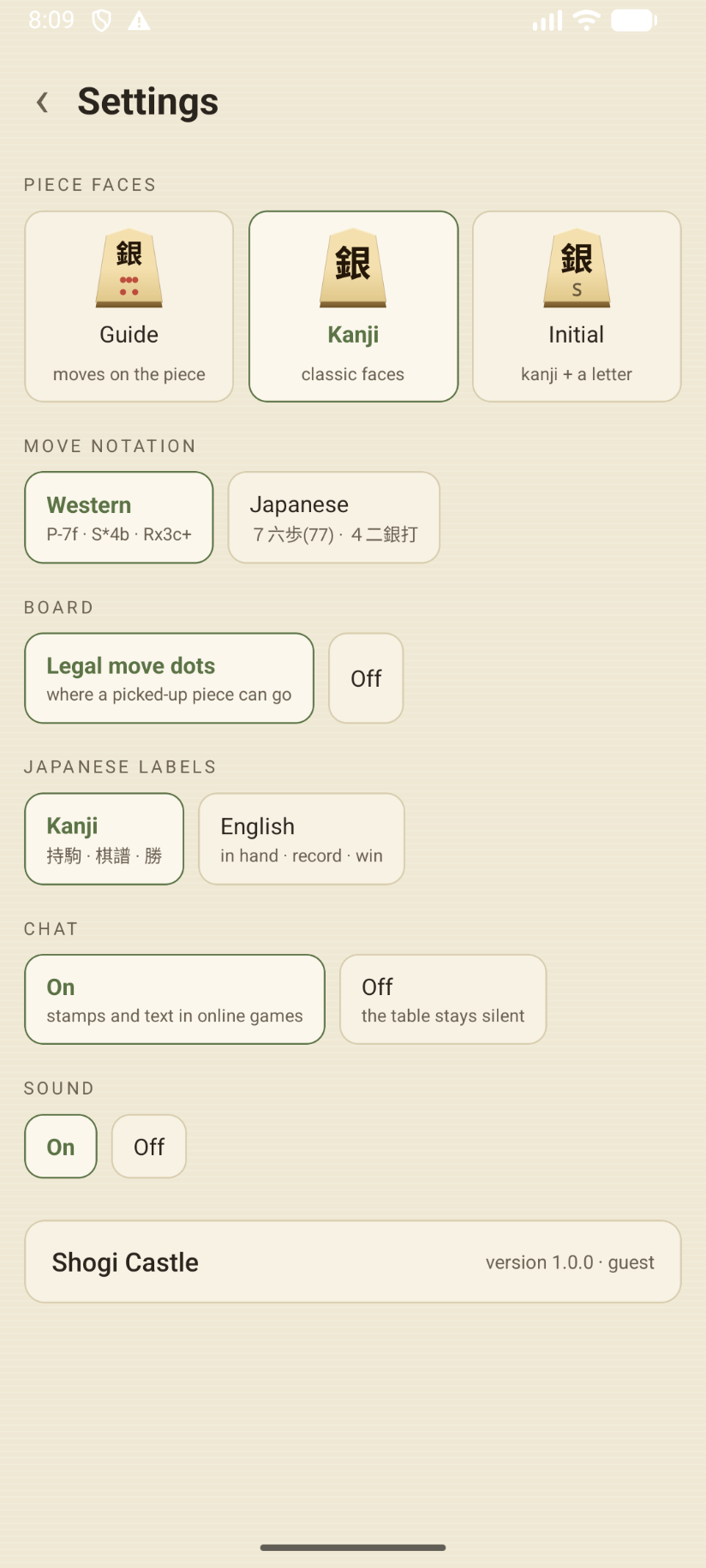
Bir taşın ne yaptığından emin değil misiniz? Taş yüzlerini Kılavuz’a alın, her taş kendi hamlelerini nokta olarak taşısın; ya da Harfli’ye alıp kanji ile harfi birlikte görün. Hamle gösterimi Batı ya da Japon usulü olabilir, tabelalar Türkçe okunabilir.
Shogi’ye yeni misiniz?
Japonya’da büyümüş hâliyle satranç.
9×9’luk bir tahta ve her tarafta yirmi taş. Taşlar karşı üçte bire geçtiklerinde terfi eder. Ve her şeyi değiştiren tek bir kural: aldığınız taş sizin olur, sonraki bir hamlede onu tahtaya geri koyabilirsiniz.
Uygulama taşları ve ilk surunuzu oyunun içinde öğretir. nasıl oynanır, taşlar ve surlar ile başlayın; günün tsume’si burada da oynanabilir.
Uygulamayı al
Android ve iPhone’da ücretsiz.
Shogi Castle Google Play’de ve App Store’da ücretsiz; telefonda da tablette de çalışır. Başlamak için hesap gerekmez.
Google PlayÜcretsiz indirApp StoreÜcretsiz indir
Ücretsiz; İngilizce, Japonca ve Türkçe. Başlamak için hesap gerekmiyor; sonradan Google ya da Apple ile giriş yaparsanız telefon değiştirdiğinizde dereceniz ve oyunlarınız sizinle gelir.